The Product Is Broken on Purpose. Here is Your Shield.
essay
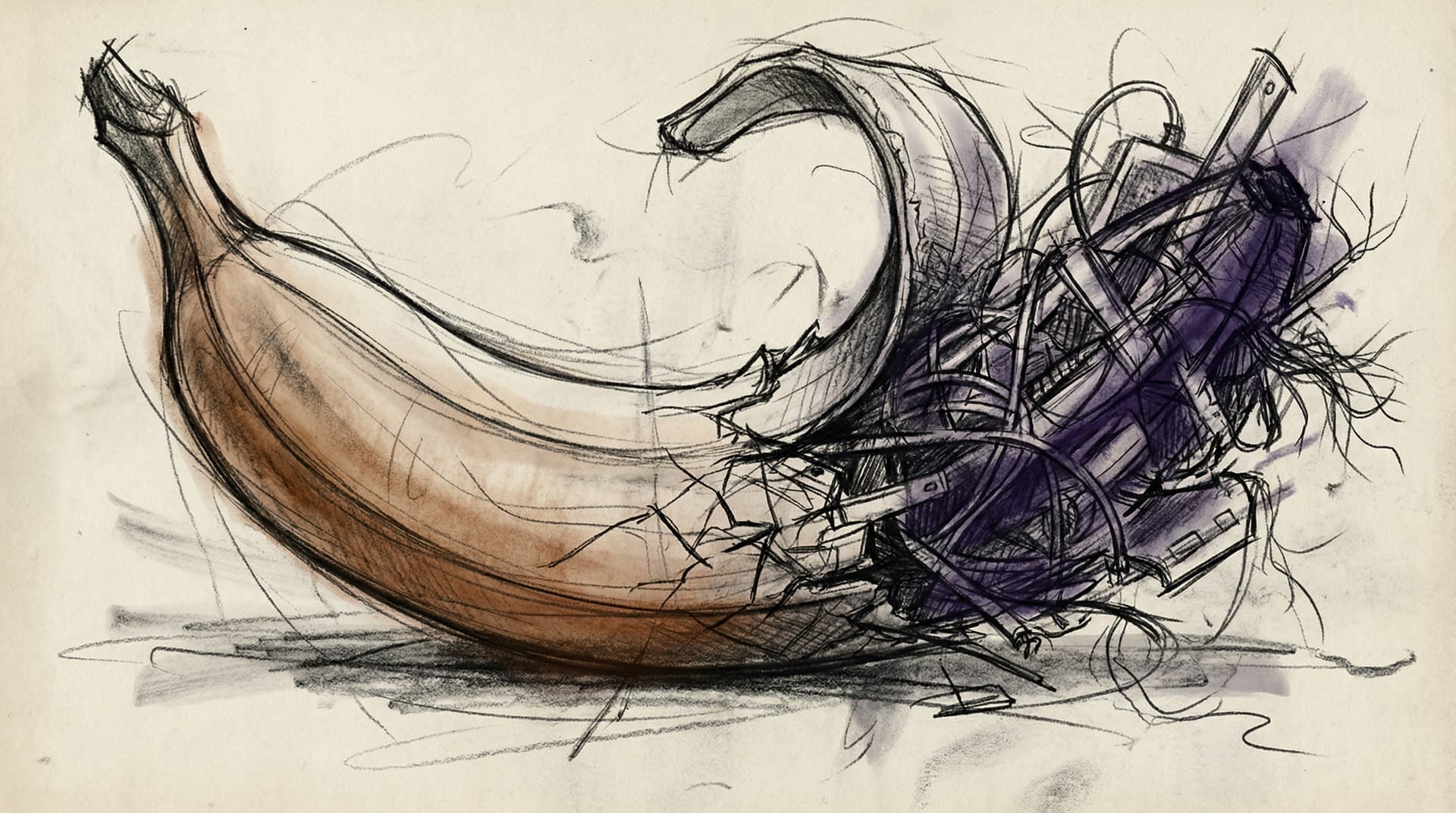
The Product Is Broken on Purpose
You buy boots. The sole peels off in four weeks. You buy a blender. The motor dies on smoothie number three. You buy a "cotton" shirt and it crinkles like a grocery bag.
This is not bad luck. This is the business model.
The Race to the Bottom
Over the last decade, retail giants turned cheapness into a science. They call it efficiency. What it actually is: a coordinated race to the worst product you'll still pay for.
They swapped steel for brittle alloy. They replaced cotton with petroleum byproducts. They gutted their quality teams and replaced them with refund calculators.
They know the exact failure point. The precise threshold where a product is terrible enough to maximize their margin but not quite terrible enough to make you stop buying. They walk that line every single day.
And while the quality drops, the price goes up.
The reviews are fake. The star ratings are purchased in bulk. The product descriptions are fiction written by algorithms. You are shopping in a rigged casino, and every machine is set to take your money.
Enter retail.ck42x.com
I built retail.ck42x.com because I got tired of funding this machine with my own wallet.
The app is simple on purpose. It's not a social network. It's not a marketplace. It is a Geiger counter for garbage. Point it at a product and it strips away the glossy photos, the bought influence, and the algorithmic fiction so you can see what you're actually about to pay for.
What Just Shipped
Two critical updates went live today:
- Deep Link Verification. The app now crawls the source URL and validates the storefront before you ever look at the listing. If the seller is shady, you know before you click.
- Search History Tracking. Every product you vet gets saved. Over time, you start seeing patterns in what passes and what fails. Your own data becomes your sharpest filter.
What It Costs
The Free Tier gives you daily searches. No tricks, no trial period, no credit card. Everyone deserves a baseline defense against this garbage.
For heavy users: $9.99 a year.
That number exists to cover API costs for deep scans. Nothing else. I do not sell your data. I do not sell your search history to the same companies ripping you off. You pay for the tool. The tool works for you. That is the entire arrangement.
Use the free searches. Use the premium tier. Just use it before you buy anything online. Stop handing your money to companies that are selling you landfill at luxury prices.
The Banana Problem
Until the 1950s, the banana everyone ate was called the Gros Michel. "Big Mike." It was creamier, sweeter, and had a flavor so intense that candy companies modeled their artificial banana flavor after it.
Then a fungus called Panama Disease wiped it out.
The replacement was the Cavendish. It wasn't chosen because it tasted better. It was chosen because it survived the fungus and its thick skin could handle a 3,000-mile truck ride without bruising.
Here's the part that should bother you. If you were born after 1960, you have never eaten the real banana. The Cavendish is all you know. And when you eat a banana Laffy Taffy and think "this doesn't taste like a real banana," you're wrong. It tastes exactly like the real banana. You are the one eating the replacement.
150 Years of Replacing Reality
The banana is not an isolated case. It's a template. For the last century and a half, entire industries have been running the same play: take something real, replace it with something that ships better, costs less, and lasts longer on a shelf. Then wait a generation until nobody remembers what the original was.
Produce. Fruits and vegetables used to be ugly, seasonal, and full of flavor. Now they're uniform, available year-round, and taste like water. They were redesigned to survive a cross-country truck ride, not to feed you.
Materials. Furniture was solid wood, leather, and metal. Now it's MDF with a photograph of wood grain glued to the surface, plastic marketed as "vegan leather," and alloys that bend if you look at them wrong. The goal was never a better product. The goal was a cheaper, lighter product that fits in a flat-pack box.
Meat. A chicken used to be an animal with a head, feet, and bones. Now it's a "nugget," a "patty," or a "tender." The product was redesigned to disconnect you from the fact that it was ever alive. Not for your benefit. For your compliance.
Scent. A pine forest smells different every day depending on rain, temperature, and season. "Pine-Sol" smells exactly the same every time you open the bottle. Real nature is inconsistent. Chemicals are reliable. Reliability is what scales.
Buying the Ghost of a Thing
The French philosopher Jean Baudrillard wrote about this decades ago. He called it hyperreality: the point where the copy replaces the original so completely that the copy becomes the new "real."
You can see it in your closet right now.
Real raw denim is stiff. It's uncomfortable. It takes years of daily wear to break in and develop fades that match your body, your habits, the way you sit and walk. That process is the entire point of the material.
Most people skip it. They buy jeans that have been chemically treated and hit with industrial lasers to simulate five years of wear. You're not buying pants. You're buying the photograph of an experience you never had. The sign of use without the reality of using.
This is the world retail.ck42x.com was built for. A world where the copy has replaced the original so thoroughly that most people can't tell the difference. The tool doesn't fix that problem. But it gives you a way to see through the first layer of the lie before you hand over your money.
Further Reading
If this pulls at something in you, these are worth your time:
- "I Consume No Real Food and I am Consumed by No Real Food" by Nan Dickerson. A deep essay on how food products became simulations and why we now prefer the processed version over the raw original.
- "The Evolution of Food Shopping: Visual Dominance" (Goumbook). How supermarkets since the 1920s trained us to judge food by how it looks under fluorescent lights instead of how it smells or tastes.
- "Hyperreality" on Wikipedia. Specifically the sections on Jean Baudrillard and Umberto Eco. Consider it the operating manual for understanding why the fruit in the grocery store feels like a plastic prop.